Finding out your foundation needs repair can feel overwhelming—especially when different contractors recommend different solutions. You might be wondering why one proposal includes piers while another suggests foam lifting, or why costs vary so widely. We get these questions a lot, so we figured it would be helpful to walk folks through typical foundation repair methods, what they mean, and why one makes sense over another.
There isn’t one right repair method for every home. The best solution depends on what’s causing the movement, how your home was built, and the soil conditions underneath. Understanding the reasoning behind each approach helps you evaluate contractor recommendations and know what questions to ask.
Why foundations need different repairs
Foundations don’t all fail in the same way. The movement you’re seeing could be caused by shifting soil, changes in moisture, freeze-thaw cycles common in Rhode Island, or simply the age and design of your foundation. Some movement is normal, but when one area settles more than another or when pressure pushes against a basement wall, the repair needs to address the specific cause, not just patch the visible damage.
This is also why two contractors may recommend different solutions. Each repair method is designed to solve a particular type of movement or instability, and companies often specialize in specific systems or have more experience with certain approaches. For a deeper look at how foundations work and what causes different types of damage, see our complete guide to concrete foundations.
Steel piers: Stabilizing settled foundations
When part of your foundation has settled unevenly (causing doors and windows to stick, floors to slope, or cracks to appear), steel piers are typically the permanent solution. These are driven deep into stable soil layers using hydraulic pressure, then attached to your foundation to lift and stabilize the settled area.
There are two main types: push piers and helical piers. Push piers work well when there’s enough weight from your home to drive them down to load-bearing soil depths. Helical piers have screw-like blades and are better for softer or variable soil conditions where you need more surface contact with the ground.
Steel pier systems address the root problem: unstable soil beneath your foundation. They don’t just treat surface symptoms like cracks.
When they’re used: Settlement issues, uneven floors, cracking from differential movement
Slabjacking and foam injection: Lifting sunken concrete
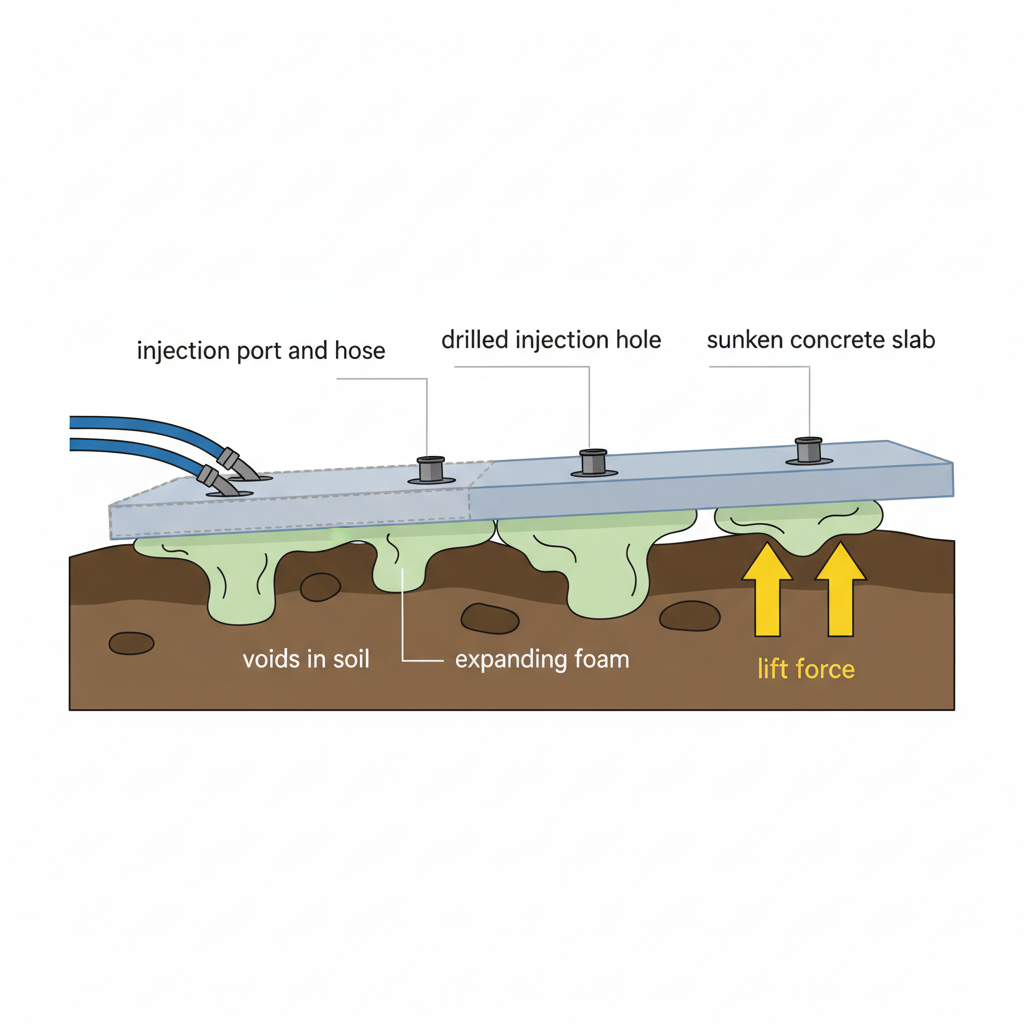
If your basement floor, garage slab, or patio has settled and created uneven surfaces or trip hazards, slabjacking or foam injection can restore the level. Both methods work by filling the void that formed beneath the concrete, lifting it back into position.
Traditional mudjacking pumps a cement-based slurry under the slab. Polyurethane foam injection uses an expanding foam that’s lighter and more precise, which puts less additional weight on already compromised soil. Most contractors in Rhode Island now prefer foam for interior work because of its accuracy and faster cure time.
These methods work well for slabs that have settled but aren’t structurally damaged. They won’t fix cracked or deteriorating concrete—only lift what’s still intact.
When they’re used: Sunken basement floors, settled garage slabs, uneven walkways
Carbon fiber reinforcement: Stopping early wall movement
If you’ve noticed new cracks or slight bowing in your basement wall, carbon fiber straps can stabilize the area before it gets worse. These thin, high-strength strips bond directly to the interior wall surface and prevent further inward movement.
Carbon fiber is most effective when wall movement is still minor, typically less than about 2 inches of deflection. It keeps existing cracks from widening and stops early-stage bowing from progressing. The installation is relatively clean and doesn’t change the room’s layout or usable space.
This is a prevention approach more than a correction method. If a wall has already bowed significantly, you’ll need a solution that can actively pull it back into alignment. For guidance on when cracks can be handled with simpler repairs versus when they need professional intervention, see our guide on fixing foundation cracks.
When they’re used: Early-stage horizontal cracks, minor bowing, preventive stabilization
Wall anchors: Correcting advanced bowing
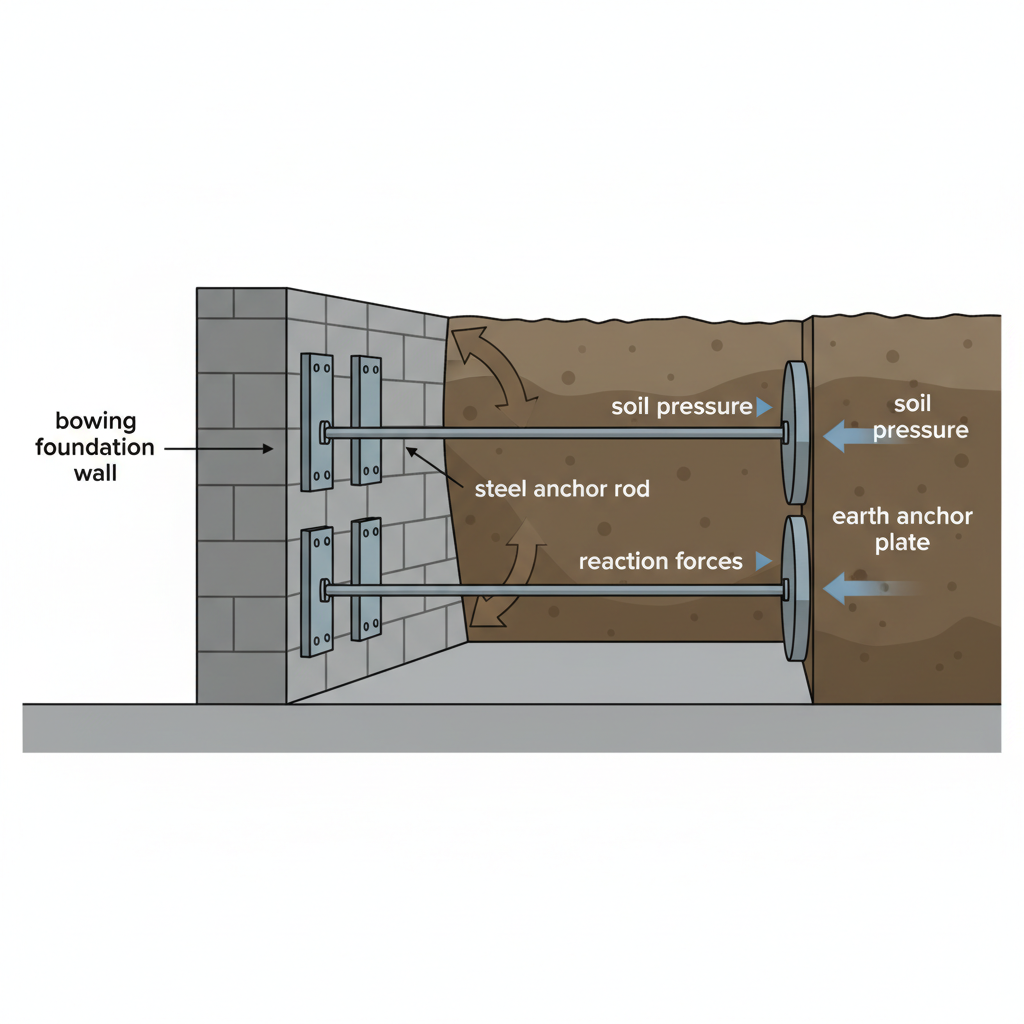
When a basement wall has a noticeable lean or significant inward movement, wall anchors provide both stabilization and gradual correction. Steel rods are driven through the wall and anchored into stable soil outside your home, then connected to interior plates. This creates a pull against the inward pressure causing the bow.
Unlike carbon fiber, wall anchors can actually straighten a wall over time by adjusting the tension on the system. The tradeoff is that the interior plates are visible on your basement walls, and the installation requires excavation outside.
When they’re used: Moderate to severe wall bowing, walls leaning inward, advanced horizontal cracking
Drainage and waterproofing: Managing water pressure
Interior drainage systems and exterior waterproofing don’t re-stabilize a foundation that’s already moved, but they prevent water-related issues from making structural problems worse. If your foundation issues are tied to poor drainage, hydrostatic pressure, or basement moisture, these systems relieve that pressure and protect the repairs you’ve made.
Common solutions include interior perimeter drains with sump pumps, exterior waterproof membranes, and improved grading around your home. In many cases, drainage improvements are done alongside structural repairs to address both the symptom and the cause.
When they’re used: Wet basements, hydrostatic pressure, preventing future moisture damage
Need help understanding what’s causing moisture in your basement? Our foundation repair services include drainage evaluations as part of every inspection.
Which foundation repair methods make sense
The right repair depends on what your foundation is actually doing. Sometimes there’s more than one valid approach. In those cases, the best solution is the one that will last while working with how your home was built and the soil conditions underneath.
| What’s Happening | Typical Solution |
| Foundation settling or sinking | Steel push piers or helical piers |
| Bowing basement wall (minor) | Carbon fiber reinforcement |
| Bowing basement wall (advanced) | Wall anchors |
| Sunken concrete slab | Slabjacking or foam injection |
| Water pressure or leaks | Drainage and waterproofing systems |
If a basement wall is bowing, for example, both carbon fiber and wall anchors might work. Carbon fiber is better when you catch the movement early, while wall anchors are needed when the bow is more pronounced. You can always ask the contractor to explain why they recommend one approach over another based on your specific situation.
Don’t just look for the least expensive option. Choose what will actually solve the problem and prevent it from coming back. If you’re comparing estimates and want to understand the reasoning behind different recommendations, we cover typical investment ranges in our foundation repair cost guide.
Choosing the right foundation repair method for the job
Every foundation problem needs its own solution. What works for one home might not be right for another because of differences in soil, foundation type, and what’s causing the movement. Understanding these repair methods helps you evaluate recommendations from contractors and choose an approach that will actually work for your home.
When you work with Set in Stone, our inspections focus on identifying what’s actually causing the movement before recommending any repair. We explain the options clearly, show you why we’re suggesting a particular approach, and give you what you need to make the right decision.
If you’re evaluating different proposals or just want clarity on what your foundation needs, reach out to schedule a free inspection. We’ll assess the situation, explain what we’re seeing, and walk you through the repair options that fit your home’s specific needs.