If you’ve noticed floors that slope slightly, doors that don’t close the way they used to, or cracks that seem to grow a little over time, you may be dealing with foundation settlement. These changes can happen gradually, and it’s common for homeowners to wonder whether they’re due to normal aging or warning signs of something more serious. In Rhode Island, where seasonal moisture changes and freeze-thaw cycles stress foundations, settlement issues are particularly common.
When you start exploring possible causes or speaking with an inspector, you may hear terms like foundation lifting and foundation leveling. While they might sound technical, understanding how your foundation works helps make these repair methods easier to grasp. Foundation lifting is a repair method used to raise and stabilize areas of the foundation that have sunk, helping bring your home back to a level position.
What foundation lifting and leveling actually means
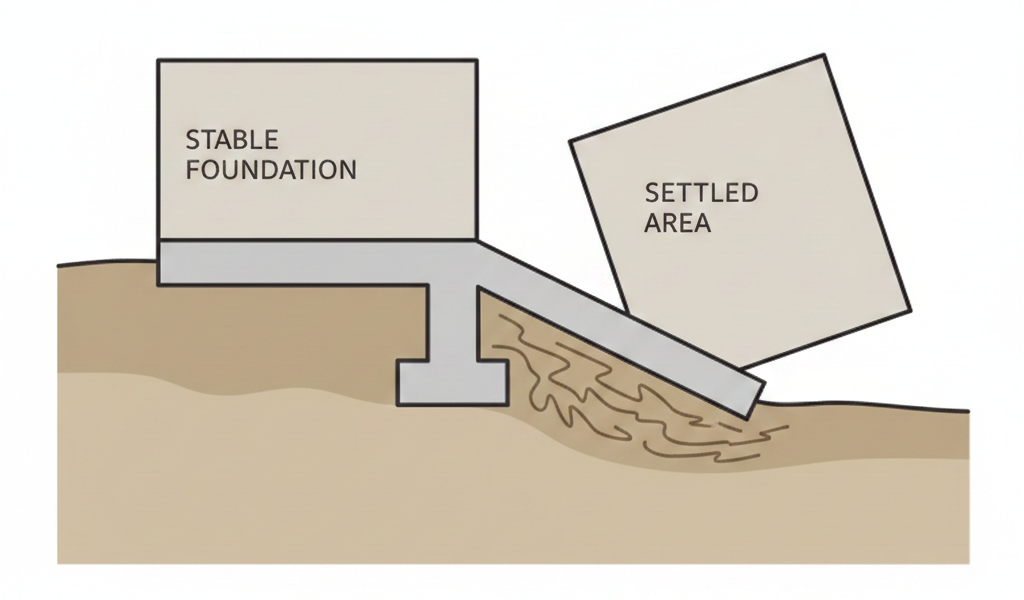
When part of a foundation settles lower than the rest of the structure, the home above it can begin to shift. Floors may tilt, gaps may form around trim, and cracks can develop as the building adjusts to the uneven support.
Foundation lifting is the controlled process of gently raising the sunken section of the foundation back toward its original position, helping restore the home’s structural integrity. Leveling refers to restoring an even, balanced support so the home sits as it was intended.
Picture your home like a table. If one leg sinks into softer ground, the entire surface becomes uneven. Lifting and leveling is like returning that one leg to the correct height so everything above it sits straight again.
This is not a sudden or aggressive motion. The lifting process is slow and precise, ensuring that the home adjusts safely and evenly.
Why foundations settle over time
Foundation settlement is common and develops gradually. Homes of nearly any age can experience it. Some of the most frequent causes include:
- Soil shifting or compression under the foundation
- Changes in moisture (dry periods, heavy rain, drainage issues)
- Soil that was not compacted fully during original construction
- Tree roots affecting soil density over time
- Natural aging of the home and its materials
In regions with seasonal temperature shifts, soil expands and contracts throughout the year. Over time, these changes can lead to settling and uneven support. Rhode Island’s mix of clay-heavy soils and freeze-thaw cycles makes this seasonal movement especially pronounced, which is why foundation settlement is so common in the state. Understanding when settlement is normal versus when it signals a foundation problem helps you know when to take action.
While the cause behind each home’s settlement may vary, the outcome is usually the same: one section of the foundation gradually lowers, and the structure adjusts along with it.
How to tell if your home may need lifting
Not every crack or uneven surface means foundation lifting is required. However, a pattern of changes over time can indicate settlement. Common signs include:
- Floors that slope, feel uneven, or appear to dip in certain areas
- Doors or windows that stick, rub, or no longer latch properly
- Cracks in interior walls, especially those that slowly widen
- Gaps forming where walls meet ceilings or where trim pulls away
- Cracks in brick, stone, or concrete along the exterior
- One part of the home appearing lower than the rest
If you’ve noticed several of these signs of foundation problems together, it may be time to have the foundation evaluated.
Only a trained foundation repair professional can determine whether lifting is the right solution. Many factors influence the best repair approach, and the evaluation process is designed to identify the most stable, long-term fix.
What to expect during the lifting process
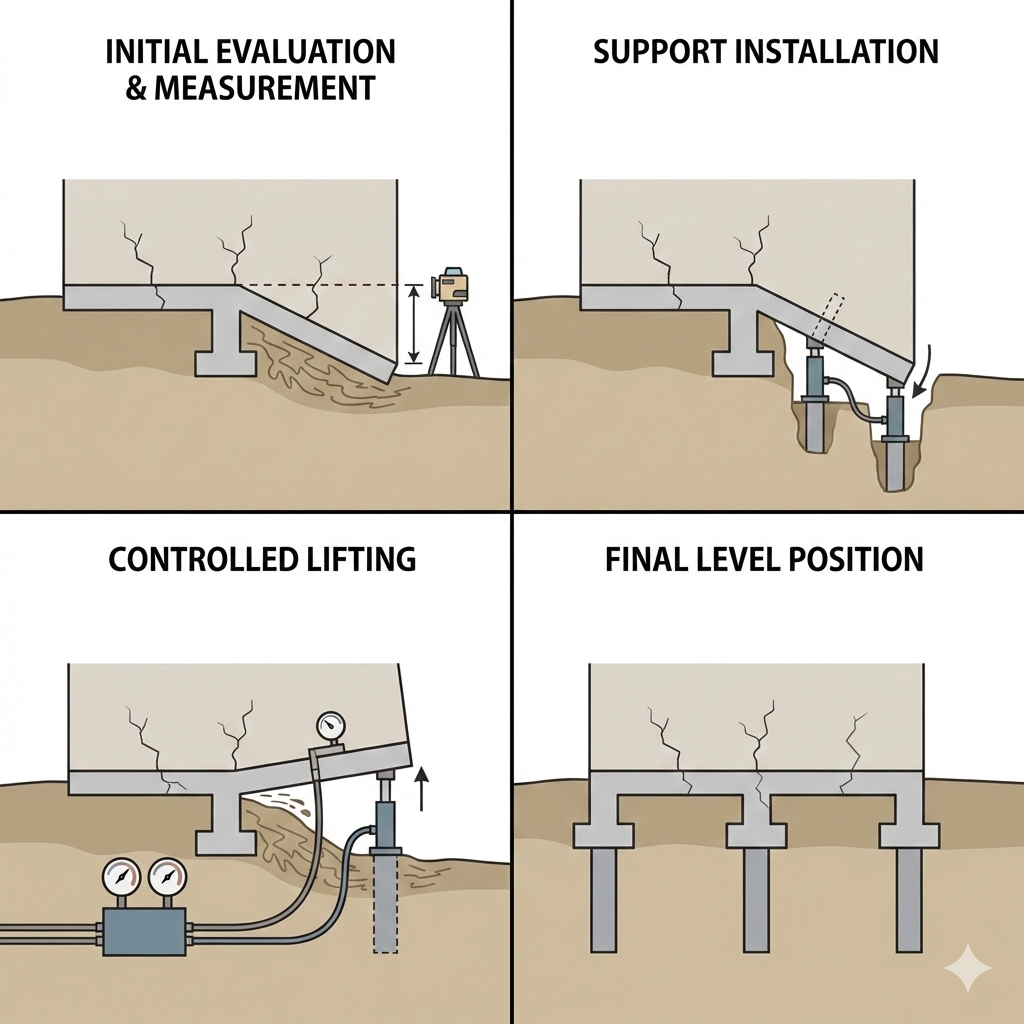
While every home is unique, the lifting and leveling process generally follows a straightforward sequence:
- Evaluation: A professional examines the foundation, documents the structural changes, and identifies the areas of settlement.
- Stabilization: Before any lifting occurs, secure supports are placed to ensure the foundation will remain stable during and after the process.
- Controlled lifting: The sunken area is slowly and carefully raised until it is aligned with the rest of the foundation. The goal is not just to lift but to restore balanced support.
- Final adjustments: Once the home is level, any finishing repairs (such as closing cracks or adjusting door frames) can be made as needed.
Throughout the process, the focus is on precision and stability. The goal is to correct settlement without causing stress to the structure. For a detailed look at this and other foundation repair methods, professionals consider both the visible damage and what’s causing it.
Understanding costs and planning ahead
Foundation lifting typically involves specialized equipment and engineering, which affects pricing. The cost varies based on how much of the foundation needs lifting, the accessibility of the work area, and the severity of settlement. Most homeowners find that understanding what affects foundation repair costs helps them plan appropriately and ask the right questions during evaluations.
When to call a professional
Not every sign of settling requires immediate repair, and foundation settlement rarely calls for emergency action. However, foundation issues do not resolve on their own, and the earlier they are evaluated, the easier they are to address.
Consider calling a professional when:
- You’re noticing ongoing changes, not just one isolated crack
- Floors or doors have gradually shifted over time
- A home inspector or contractor has recommended an evaluation
A professional assessment provides clarity. It helps you understand not just what’s happening, but what your options are and which repair approach will best support your home long-term.
Moving forward with confidence
Foundation settlement is common, and foundation lifting and leveling are effective ways to address it. When completed by experienced professionals, the process restores even support, reduces strain on the home’s structure, and helps prevent ongoing shifting.
If you’ve noticed signs of uneven settling and are unsure whether it’s time to take action, Set in Stone can help. Our team provides straightforward evaluations and explains your options in clear terms. Reach out for a free foundation evaluation today.