Foundations experience stress everywhere, but the combination of coastal moisture, freeze–thaw cycles, mixed soil types, and older housing stock makes foundation issues especially common in Rhode Island. Many homes in the state have basements—some original to the early 1900s—and those foundations have interacted with shifting soil and seasonal temperature swings for decades.
Below, we’ll look at the most common foundation problems in Rhode Island, what tends to cause them here, and when to monitor versus call a professional.
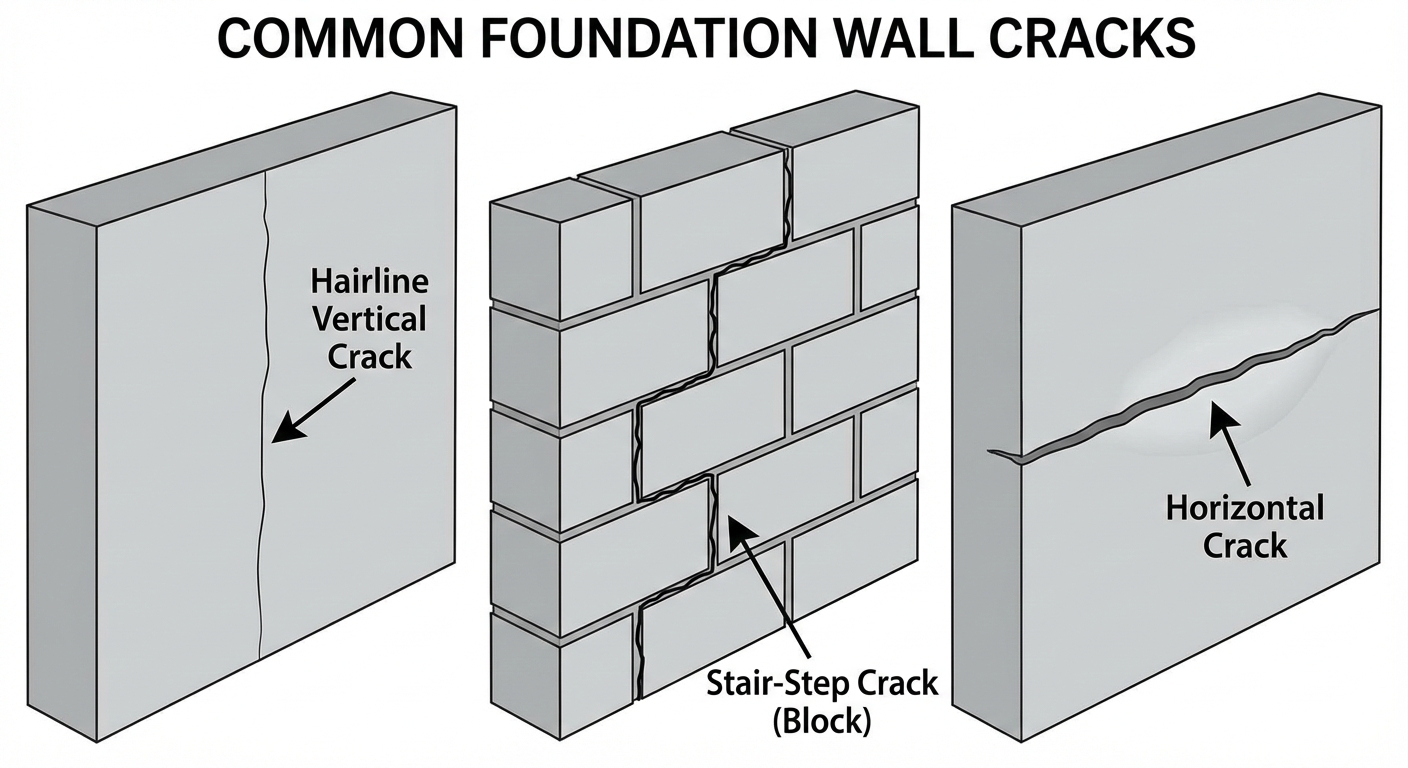
Hairline vertical cracks in basement foundation walls
Hairline vertical cracks are one of the most frequently seen foundation cracks in Rhode Island homes. While they are often one of the earliest visible signs of foundation damage, they are not always structurally serious. These cracks often appear in poured concrete basement walls, which became standard in the mid‑20th century as older stone foundations were replaced or expanded across the state. In many cases, these cracks form as concrete cures and shrinks during the first few years after construction, or as the home settles slightly over time.
Rhode Island’s freeze–thaw cycle makes these cracks particularly common. As moisture in the surrounding soil freezes and thaws throughout the winter, it creates subtle shifting that encourages narrow vertical cracks to form where the foundation is naturally weakest.
These cracks may be minor foundation problems if:
- They are thin (hairline) and consistent in width
- There is no water seepage
- The crack does not lengthen or widen over time
They may require evaluation if:
- The crack is wider than 1/8”
- Water is entering through it
- There are nearby symptoms such as sticking doors or door frames or uneven floors
Understanding when settling is normal versus problematic can help you decide whether a hairline crack simply needs monitoring or professional attention.
Stair-step cracks in block or stone foundations
Many older homes in Rhode Island, especially those built before the 1940s, have stone or concrete block foundations, while some mid‑century homes feature concrete slabs or partial crawl space foundations. These foundations can develop stair-step cracks, where the crack follows the mortar joints in a zig-zag pattern.
In Rhode Island, stair-step cracks often form due to moisture expansion in mortar joints combined with soil shifting beneath the foundation. When groundwater or coastal humidity enters the mortar, it weakens the joints over time. Add winter freeze–thaw cycles, and the expansion can gradually create visible cracking.
Monitor if:
- Cracks are narrow and not expanding
- Mortar is intact and not crumbling
- There is no inward bowing of the wall
Call a professional if:
- Cracks are widening or spreading
- Mortar is deteriorating or powdering
- The wall begins to tilt or bulge inward
Horizontal cracks or bowing basement walls
Horizontal cracks are less common but more serious, particularly in basements where soil pressure is high. Rhode Island’s dense, moisture-rich soils—especially in areas with high groundwater or near the coast (such as Narragansett, Newport, or South Kingstown)—can exert lateral pressure on foundation walls, potentially leading to foundation damage over time.
When that pressure builds, the wall may bow inward or develop a horizontal crack along its midsection. Freeze–thaw cycles intensify this pressure when water in the soil freezes and expands.
This is one of the clearest signs that the wall’s structural integrity may be compromised and that professional evaluation is needed, even if the crack is not leaking.
Water seepage and damp basement walls
Due to Rhode Island’s high seasonal moisture and coastal climate, basement dampness is extremely common—even in newer homes. Water intrusion — a common source of foundation trouble and water damage — can occur through:
- Cracks in the foundation
- The joint where the wall meets the floor
- Porous foundation materials
- Drainage systems that no longer function properly
White, chalky residue (efflorescence) on walls is often an early sign of moisture movement—not necessarily active leaks, but a signal that water vapor is migrating through the concrete.
You should seek help if:
- You see recurring water seepage after rain
- There is mold or a musty odor
- Items stored in the basement feel damp
If you’re noticing multiple symptoms beyond just dampness, our guide to recognizing signs of foundation problems can help you assess what you’re seeing.
Uneven or sloping floors
Uneven flooring in Rhode Island homes is often tied to differential settlement. Many neighborhoods were built on a mix of clay, sand, and ledge, meaning the soil beneath one section of a home may shift differently than another, sometimes due to gradual soil erosion or seasonal moisture changes, which can lead to foundation damage over time.
This is especially common in homes built on historic fill, coastal inlets, or areas where older foundations were expanded without matching the original footing depth.
If floors are noticeably sloped or continue to shift, it’s important to determine whether the issue is related to foundation movement, framing settlement, or broader foundation damage.
Common repair and stabilization solutions for foundation repair
The right approach depends on the specific issue and its underlying cause. For a comprehensive look at foundation repair methods and when each is appropriate, professionals assess both the visible symptoms and what’s driving them.
Common foundation repair and stabilization approaches include:
- Crack injection (epoxy or polyurethane) to seal and strengthen cracks
- Drainage improvements to reduce soil and moisture pressure
- Basement waterproofing to manage seepage or high humidity
- Foundation wall stabilization (including foundation piers where deeper support is needed) when bowing or lateral pressure is present
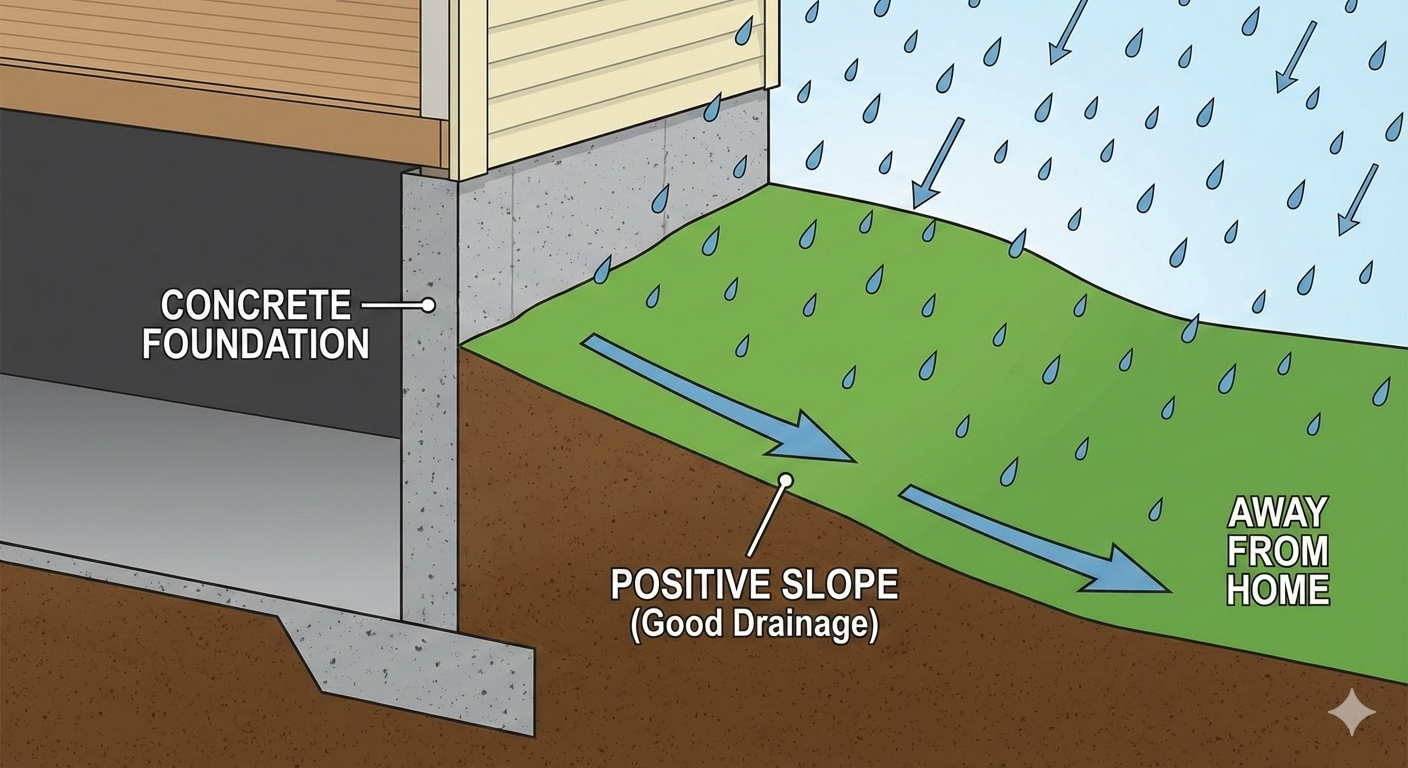
- Soil or grading corrections to improve long-term stability
While some smaller repairs, like sealing minor cracks, may be manageable for homeowners, issues involving moisture, shifting, crawl space concerns, or wall movement should be evaluated by a professional. In cases involving significant movement or complex load paths, consulting a structural engineer may also be recommended.
Simple ways to protect your foundation long-term
Since moisture and seasonal soil movement are two of the most common stressors on foundations in Rhode Island, a few ongoing maintenance steps can help:
- Keep gutters and downspouts clean and directed away from the home to reduce drainage issues
- Ensure grading slopes away from foundation walls
- Use dehumidifiers or ventilation in basements to manage moisture
- Check cracks seasonally for any changes — regular inspections help you catch movement early
Get clarity on your home’s foundation
Foundation issues are common in Rhode Island due to climate and soil conditions, and catching them early matters. If you’re noticing changes in your foundation and want a clear assessment, we’re here to help. Set in Stone provides local, experienced evaluations so you know exactly what your home needs—and what it doesn’t. Contact us today to schedule a consultation.